About This Book
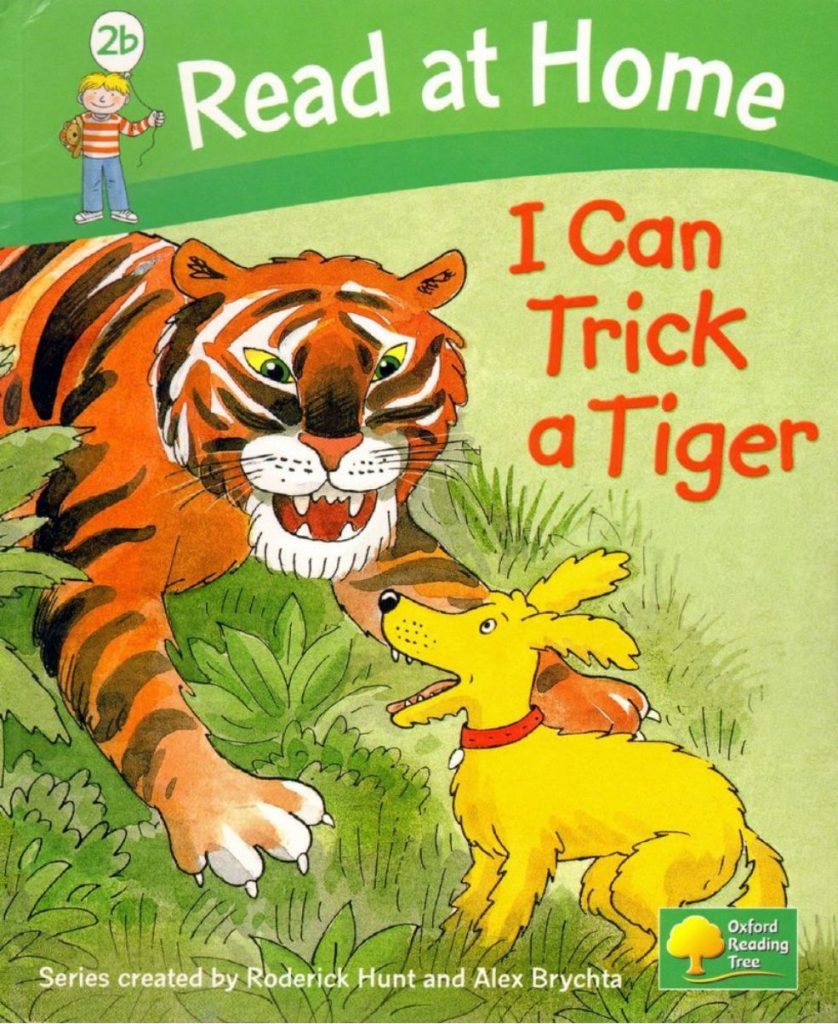
Read At Home I Can Trick A Tiger is an early-reader storybook from the Read At Home series built around a boast: its young narrator claims, in the title itself, the power to outwit a tiger. It is told in the series’ few, carefully repeated words, with the pictures carrying the danger so the text can stay light.
Trickster stories are humanity’s oldest children’s literature, and this book is their early-reader heir. The pattern — small creature, large threat, victory by wit rather than force — survives every culture that tells stories, because it speaks directly to a child’s actual position in the world: surrounded by bigger beings, armed mainly with a mind. At this level the trick is necessarily gentle, the tiger necessarily outwitted rather than harmed, and the moral stays where young readers need it: thinking is a kind of strength, and the small are not helpless. The reading design does not change for the bolder premise — key words repeated, sentences patterned, one sitting’s worth of story — because the series understands that courage in content must never become cruelty in difficulty. The boast gets backed, the reader gets finished, and both leave taller.
What Learners Will Practise
Cleverness, the Child-Sized Virtue
Children practise following a plan: a trick has a setup and a payoff, and tracking it trains the prediction muscles reading runs on — what might the small one do, and did the story do it? Cause and effect, motive and scheme: the machinery of all later fiction, met first in miniature.
A Tiger at Safe Distance
The story practises managed bravery: a genuinely frightening animal, encountered entirely inside a book’s safety. Children rehearse fear-and-relief at storybook range — the delicious shiver, the safe ending — which is one of the oldest uses of tales and a real emotional skill in its own right.
The Boast, Backed
The title practises first-person confidence: ‘I can’ is the sentence, and the story is its evidence. Young readers absorb the grammar of capability — claim, attempt, outcome — in the voice of a narrator their own size, which is how storybooks quietly teach children to narrate themselves.
Key Features
The boast is the feature: a title that dares the reader to open the book. The trickster pattern is the second — the oldest plot there is, sized for beginners — and the gentle outcome the third, wit winning without anyone harmed. In this collection it is the young readers’ first tall tale: danger in the pictures, safety in the text.
Who This Book Is For
Beginning readers who like their stories brave are its first audience. Parents form its second readership — the audience for the retelling, in which the child performs the trick again at the kitchen table. Teachers make its third: trickster tales open the door to every folk tale that follows.
How to Use This Book
Start with the title: ask the reader how they would trick a tiger before a page is turned, and let their scheme ride along as the book’s unfolds. Pause at the pictures — tigers reward looking — and let prediction do the teaching. Afterwards, the retelling is the real exercise: a child who can re-tell a trick, in order, owns the story completely. Expect the boast to be quoted for days; that quoting is the sound of a reader forming.
Related Books
The dog whose adventures share this series’ shelf waits at Read At Home Floppy And The Bone, and the snow-country journey stands at Read At Home Husky Adventure.