About This Book
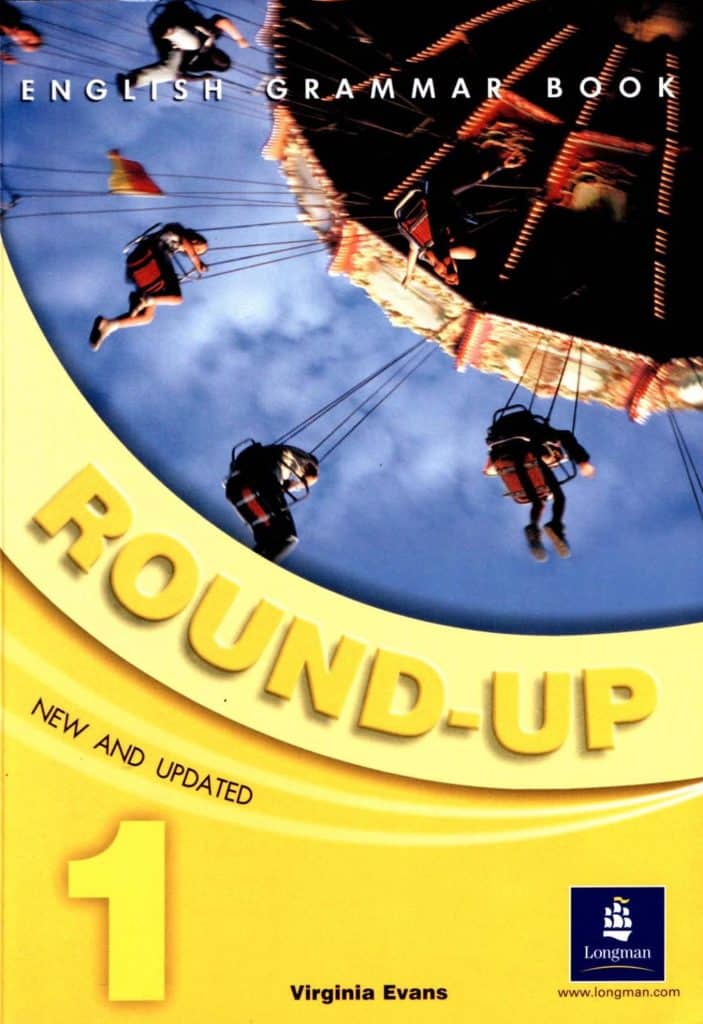
Round Up English Grammar Book 1 is the first book of the Round Up English Grammar course. The destination page is headed with this post’s exact title, and the file it serves, ‘English Grammar Round Up 1.pdf’, carries the same course and level in the host’s word order — the same volume under the filename the site serves it by. The book’s work is the opening of the gathering: first structures collected kindly, the course’s promise stated in practice, and the learner recruited for the long drive ahead.
Beginnings in long courses are load-bearing. A child who meets Book 1 and finds it welcoming will grant Books 2 through 6 a presumption of goodwill that no later volume could earn on its own; a child who finds it cold will tax every successor with suspicion. The Round Up opening therefore spends its design where sceptics would not: on the felt experience of the first weeks — herds small enough to count, strays retrieved visibly and kindly, progress the learner can point at. The promise itself is the pedagogy. ‘Nothing essential left wandering’ tells a beginning learner that the course knows the whole territory and will not abandon them inside it, and children, who are connoisseurs of abandonment, hear such promises precisely. Teachers opening a six-year arc with this volume are really signing the same promise in front of a class; the book’s kindness in the early pages is what makes the signature credible when Book 4 starts demanding range and Book 6 starts auditing the whole map.
What Learners Will Practise
First Herds, Countable
Learners practise gathering first structures in groups small enough to survey whole. A herd you can count is a grammar you can trust.
Strays Retrieved Kindly
The book practises recovering the pieces that wander — errors treated as strays to fetch, not faults to punish. Retrieval without shame is the course’s founding climate.
Progress You Can Point At
Readers practise finishing units whose completion is visible to themselves. Pointable progress is what recruits a beginner for a six-book journey.
Key Features
The recruiting design is the feature: a long course’s promise made credible in one volume. The founding climate is the second — strays fetched, never shamed — and the shelf fit the third, the opener beside this list’s starter and second book. On this shelf it opens the gathering here.
Who This Book Is For
Beginning learners meeting the course are its first audience. Teachers form its second readership, casting a long arc’s first year. Parents make its third, deciding on the shelf.
How to Use This Book
Sell the journey honestly at the start: six books, one promise, no strays. Keep early sessions short and visibly finished; recruitment is built from completions. Shelve the book where its successors will stand — an empty space beside it is a promise the child can see.
Related Books
The starter volume stands at Round Up English Grammar Book Starter, and the second book at Round Up English Grammar Book 2.